Bike Trainer -Your 24/7 Indoor Cycling Partner
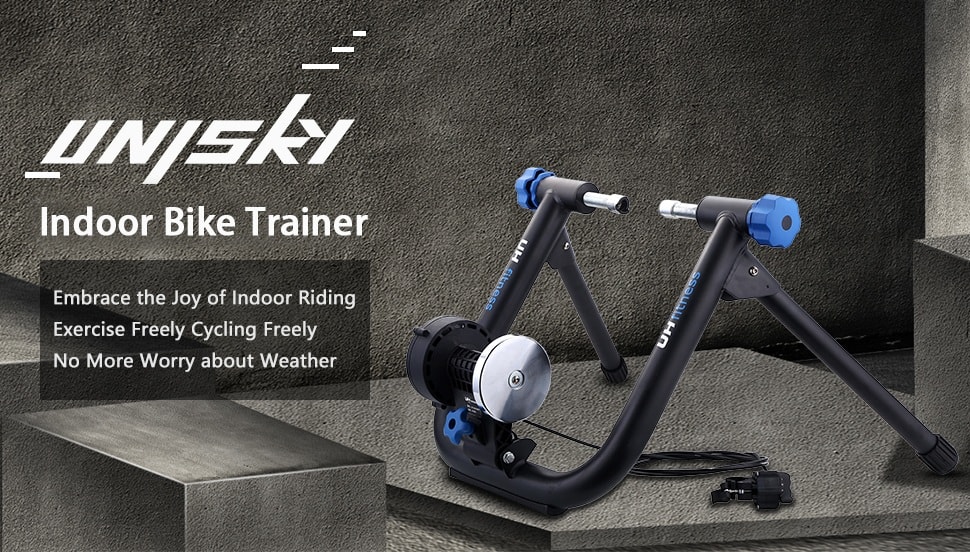
Indoor Bicycle Trainers — Types, Benefits & Smart Training Guide
Indoor bicycle trainers have become increasingly popular in recent years as a cycling training tool, allowing cyclists to train efficiently at home, free from weather and traffic constraints. Below is a detailed introduction to their types and key advantages.
I. Types of Indoor Trainers
Fixed Indoor Trainers (Rear-Wheel Mounted Type)
How it works: The bicycle's rear wheel is secured via a quick-release or thru-axle skewer onto a calibrator, with the tire pressing against a roller that provides resistance.
Breakdown by Resistance Type:
🧲 Magnetic Resistance
Adjusts resistance by changing the distance between magnets and a metal flywheel.
Advantages: Quiet and smooth resistance transition.
Disadvantages: Typically does not support ERG mode (automatic power adjustment), with a limited resistance range.
💧 Fluid Resistance
Resistance comes from a fluid turbine. The harder you pedal, the greater the resistance, simulating the feel of riding uphill.
Advantages: Realistic road feel and quiet operation.
Direct-Drive Type (Current Mainstream)
The bicycle's rear wheel is removed, and the frame is directly mounted to the trainer's flywheel and drivetrain via a quick-release or thru-axle.
⚡ Direct-Drive Trainer
Advantages: Stable, quiet, excellent road feel, supports power measurement and smart control, and eliminates tire wear.
Suitable for: Everyone from beginners to professional cyclists, with the direct-drive type being the top choice for serious trainers. Most Popular
Fully Smart Trainers
Essence: A subset of fixed direct-drive trainers, but equipped with a built-in power meter and Bluetooth/ANT+ connectivity.
📱 Smart Trainer
Core Features:
- Syncs with cycling training apps (e.g., Zwift, Rouvy, TrainerRoad, Wahoo SYSTM) for virtual riding
- Software automatically adjusts resistance based on virtual terrain (uphill, downhill)
- Enables participation in online races, group rides, and structured workouts
- Delivers an immersive, gamified experience
Suitable for: Users seeking efficient training, fun, and virtual social riding experiences. Smart Choice
II. Advantages of Indoor Trainers
🌤️ 1. Perfect for Extreme Weather
No Limitations: Train safely and comfortably regardless of wind, rain, cold, smog, or darkness.
Safety: Completely avoids traffic risks and road hazards.
⏱️ 2. Maximized Time Efficiency
No Prep Needed: Saves time on gearing up, inflating tires, and bike checks.
Train and Finish: After training, you can shower and rest at home — ideal for busy urbanites.
Precise Control: Enables high-quality, uninterrupted training within a fixed timeframe.
📊 3. High Training Quality & Data Insights
Structured Training: Perfect for executing precise interval, threshold, and other targeted workouts without external interference.
Real-Time Data Monitoring: Smart trainers connect to apps to monitor power, heart rate, cadence, distance, and more.
ERG Mode: Automatically adjusts resistance to force target power output, ensuring strict adherence to the training plan.
🎮 4. Fun and Immersion
Virtual Worlds: Platforms like Zwift let you ride famous routes (e.g., the Alps, central London) with lifelike scenery.
Gamification & Social Features: Join online races, chase achievements, and ride in real time with cyclists worldwide.
Workouts and Plans: Many apps offer training plans for different goals, guided by virtual coaches.
🛡️ 5. Bike and Body Friendly
Reduces Wear and Tear: Indoor riding protects your bike from weather and road wear (direct-drive models also prevent tire wear).
Ideal for Recovery and Adjustments: Post-injury rehab can be done in a fully controlled setting. Also makes it easy to adjust cleats, saddle position, etc.
🏠 6. Family-Friendly & Space-Efficient
Saves Space: Most trainers can be folded or stored upright, taking up minimal room.
Balances Family Time: Training allows you to communicate with family and attend to household needs.
🌧️ Don't let weather, time, or excuses steal your freedom to ride!
Imagine this: while rain pours outside, winds howl, or the streets lie empty late at night, you're charging up legendary climbs in the Alps, feeling your muscles burn. The next moment, you're sprinting shoulder-to-shoulder with riders from around the world on a virtual track, with the rush of wind and the rhythm of your heartbeat in your ears.
This isn't a fantasy — it's your next ride.
🚴 Unisky — Your Indoor Cycling Partner
Discover our range of smart trainers, direct-drive systems, and training accessories.